NEW YORK STATE REGENTS · ENGLISH LANGUAGE ARTS
June 2026 English Language Arts Regents Past Paper & Solutions
Work through reading analysis, horse racing and the effects of silence with a question-by-question walkthrough of the exam.
- 26 worked questions
- 2 writing models
- 3 exam parts
The question images and page numbers come from the regular-size English exam. OnlyPrepy wrote the summaries and worked solutions.
Quick answer key for Part 1
Part 1 Reading comprehension
Question indexQ1 Chess pieces as veterans
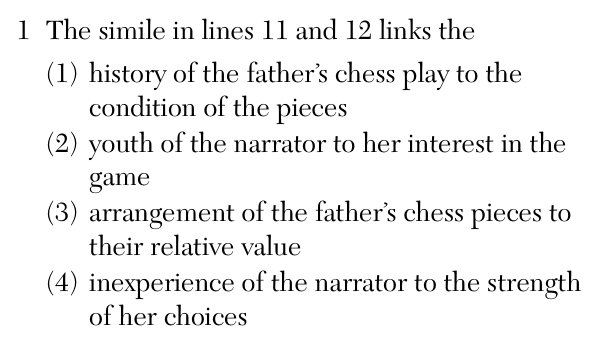
What does the simile about the worn chess pieces connect?
Worked solution for question 1
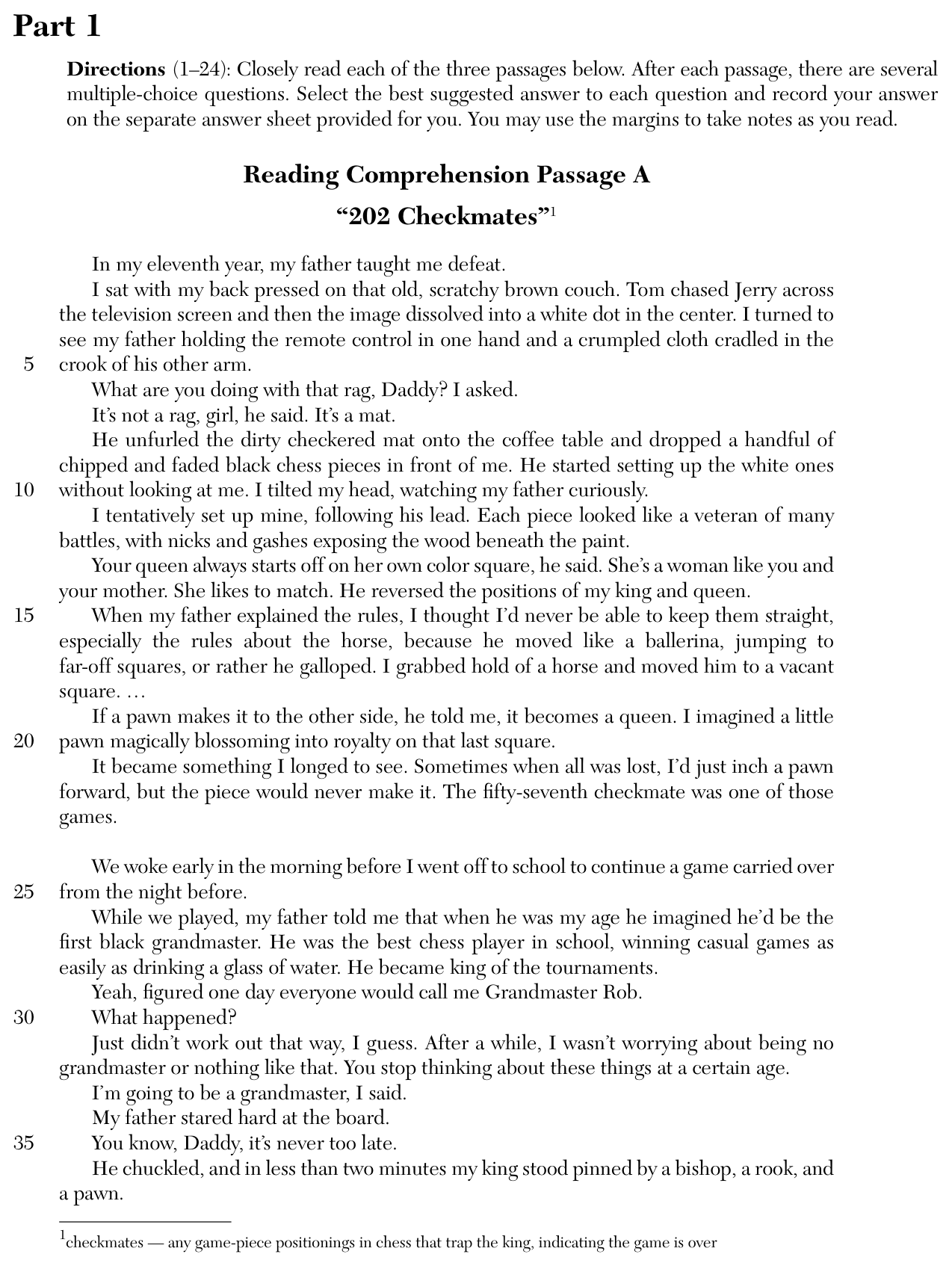
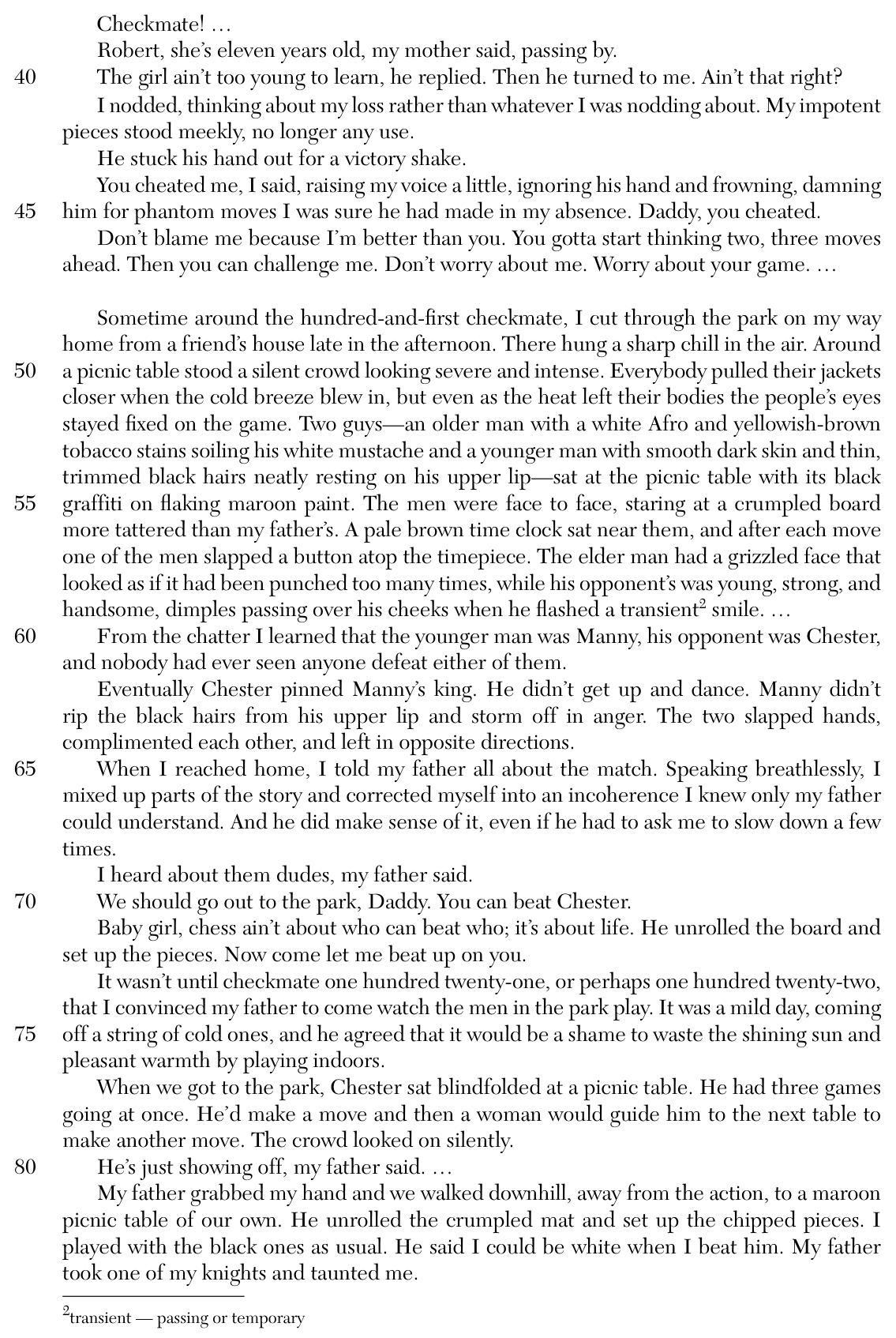
- The scratches and bare wood look like marks left by battles.
- The comparison turns wear into evidence of many earlier games.
- The simile makes the worn surfaces tell a story. What looks like damage is also a record of how often the father has returned to the game.
Answer choice 1The father’s playing history and the pieces’ condition
Q2 Seeing a pawn’s possibilities
What do lines 19–22 suggest about the narrator?
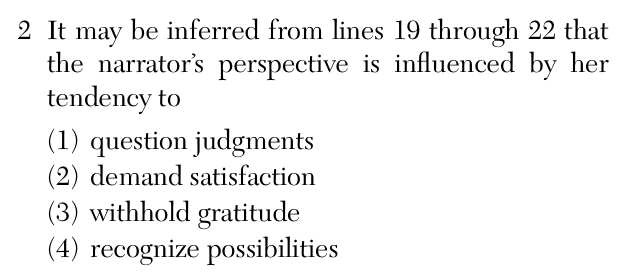
Worked solution for question 2
- She imagines a pawn changing into a queen and keeps trying to advance one even in a losing game.
- Her attention stays on what the piece might become.
Answer choice 4She recognizes possibilities.
Q3 The father’s changing play
How does the father respond to the narrator’s ambitions?
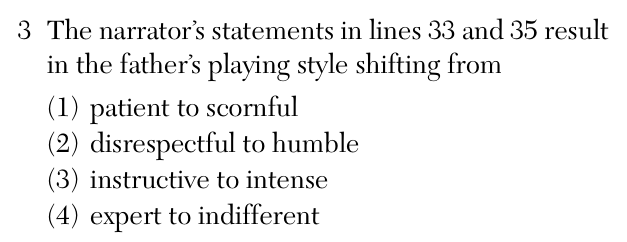
Worked solution for question 3
- He has been explaining the game and discussing his own goals. After she says he still has time, he fixes his attention on the board.
- The quick checkmate marks the change in intensity.
- Compare the father’s behavior on either side of his daughter’s remark. Conversation and instruction give way to concentrated moves that end the game quickly.
Answer choice 3He shifts from instruction to intense play.
Q4 Accusations of cheating
What do the narrator’s complaints reveal?
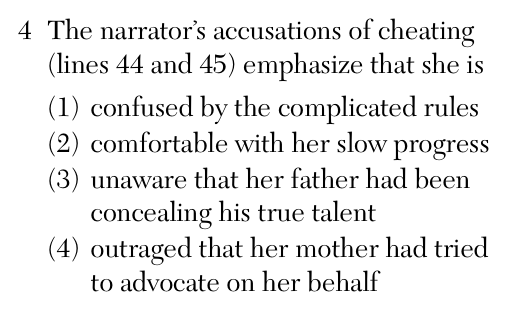
Worked solution for question 4
- She imagines unexplained moves because she cannot account for how he trapped her king.
- His advice about thinking several moves ahead identifies the skill she has yet to develop.
Answer choice 3She is confused by the game’s complexity.
Q5 The crowd at the park
What does the crowd’s behavior suggest?
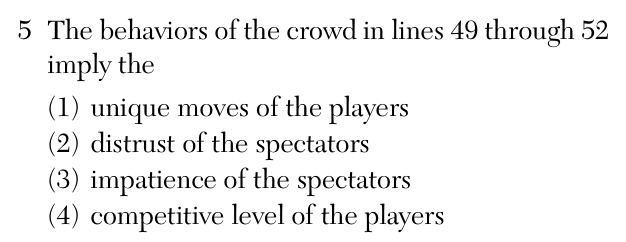
Worked solution for question 5
- Spectators remain silent and keep watching despite the cold.
- That concentration suggests a match worth studying closely.
- Remaining quiet allows the crowd to follow each move. Staying in the cold adds a second clue that the play itself is holding their attention.
Answer choice 4The players are competing at a high level.
Q6 Chester and Manny
How are the two players primarily described?
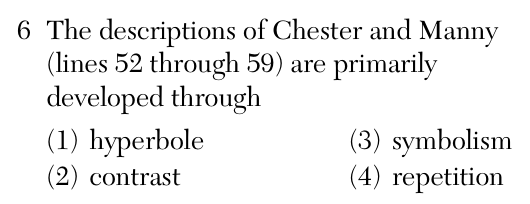
Worked solution for question 6
- The narrator sets Chester’s age and weathered appearance beside Manny’s youth and smooth features.
- The paired details make each man more distinct.
Answer choice 2Through contrast
Q7 Sportsmanship
What does the narrator learn by watching the match end?
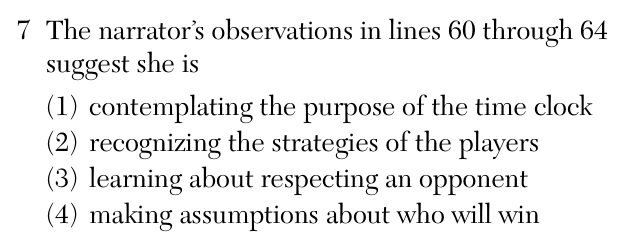
Worked solution for question 7
- The winner refrains from gloating and the loser refrains from anger.
- They congratulate each other and part peacefully, modeling respect after a decisive result.
- The players’ reactions after the result are the evidence. The winner’s restraint and the loser’s graciousness show that respect can survive a contest with a clear winner.
Answer choice 3How to respect an opponent
Q8 Chess and life
What does her father’s reply in lines 70–72 show about the narrator?
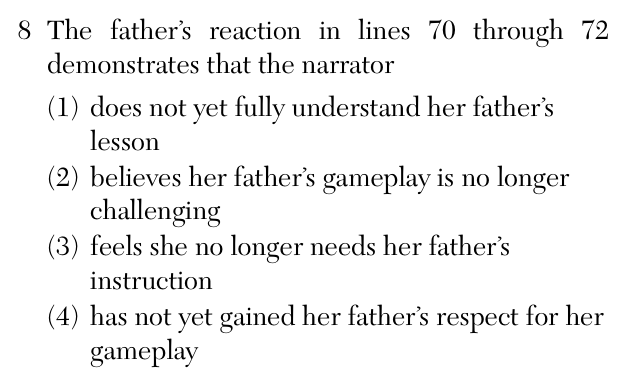
Worked solution for question 8
- She wants to see who would beat whom. He explains that chess is about life.
- The difference in their emphasis shows that she still sees competition more narrowly.
Answer choice 1She has not fully understood the lesson.
Q9 Meaning of the crumpled boards
What do the worn boards imply when read as an extended metaphor for life?
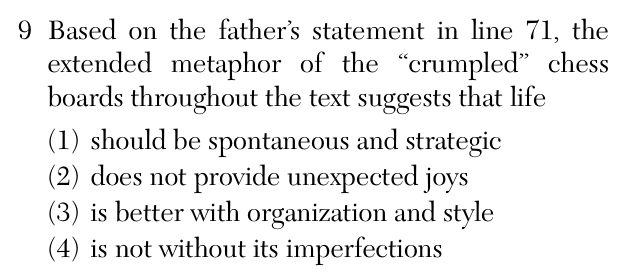
Worked solution for question 9
- The father’s equipment is ragged, and even the accomplished park players use a more battered board.
- Meaningful play takes place on imperfect surfaces, just as growth occurs under imperfect conditions.
- The comparison works at both levels. An uneven board still allows skilled play, and imperfect circumstances still allow people to learn and act well.
Answer choice 4Life includes imperfections.
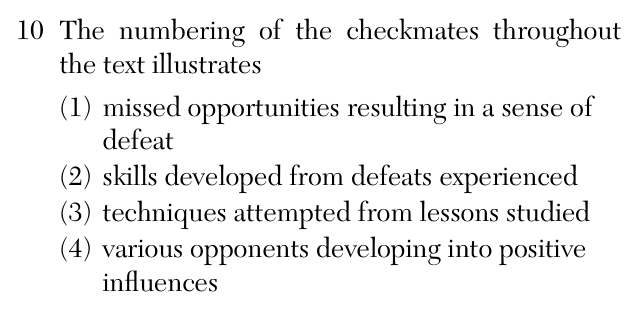
Q10 Counting checkmates
What is the function of numbering the defeats?
Worked solution for question 10
- The numbered losses mark stages from a beginner’s frustration to the ability to spot a weakness.
- The sequence makes improvement visible despite repeated defeat.
Answer choice 2To show skills acquired through losses
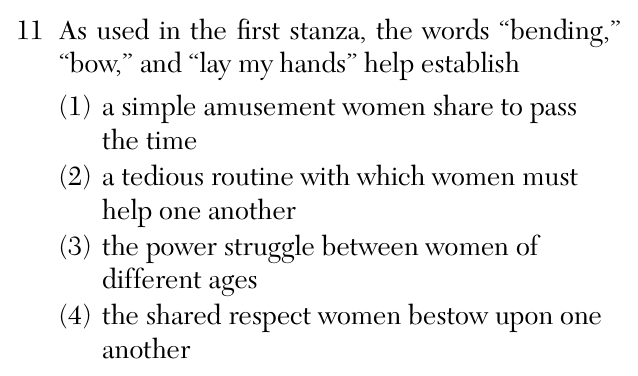
Q11 The gestures of combing
What do the physical gestures in the first stanza establish?
Worked solution for question 11
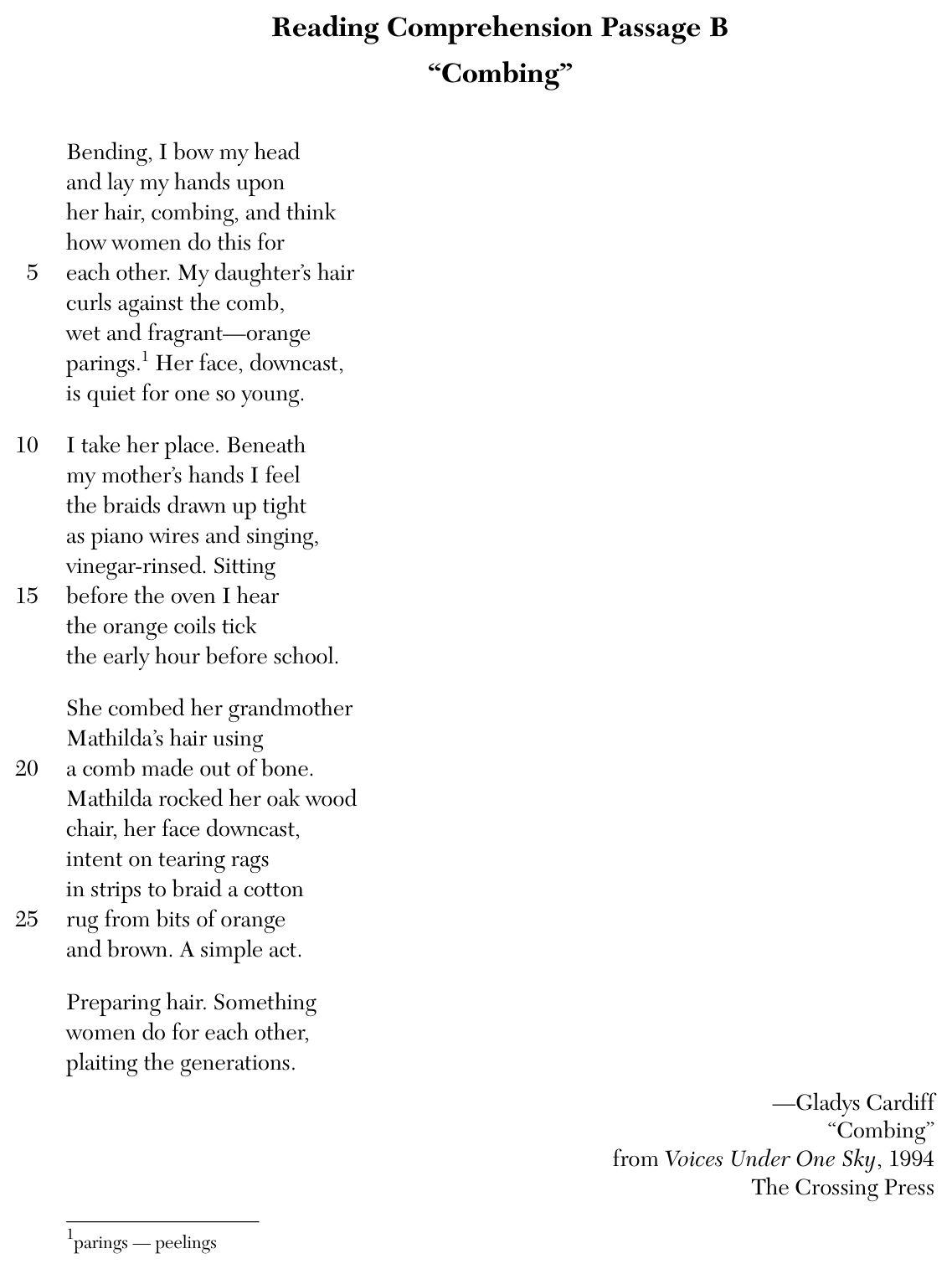
- The speaker bows over her daughter and carefully tends her hair.
- These attentive actions give an ordinary act the dignity of a gesture of care.
- The speaker’s posture can be read both literally and figuratively. Bending makes it possible to tend the hair and also resembles a deliberate gesture of respect.
Answer choice 4Respect shared among women
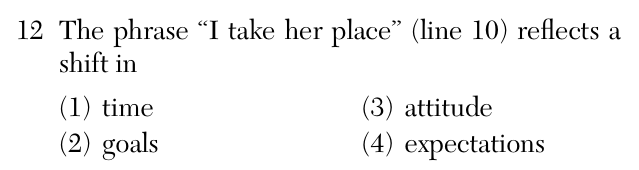
Q12 Taking her daughter’s place
What changes at line 10?
Worked solution for question 12
- The daughter’s present experience prompts the speaker to recall being beneath her own mother’s hands.
- The speaker moves from the person giving care to the child receiving it in memory.
Answer choice 1Time shifts into the speaker’s childhood.
Q13 Plaiting the generations
What does plaiting mean in the last line?
Worked solution for question 13
- Braids combine strands of hair, and Mathilda combines strips for a rug.
- The ending transfers that process to generations joined by repeated care.
- Hair and rug strips are concrete versions of the same process. The metaphor then asks the reader to see repeated acts of care as strands that connect different lives.
Answer choice 2Intertwining
Q14 Structure of the poem
Which technique primarily develops the poem?
Worked solution for question 14
- Several generations repeat the act of tending another woman’s hair.
- The repeated posture and braiding link the scenes across time.
- Identify the matching action across the scenes. The women repeat the pattern of caring for someone else’s hair in different generations, making parallel structure central to the poem.
Answer choice 3Parallels
Q15 Opening coyote anecdote
Why begin with a coyote at a construction site?
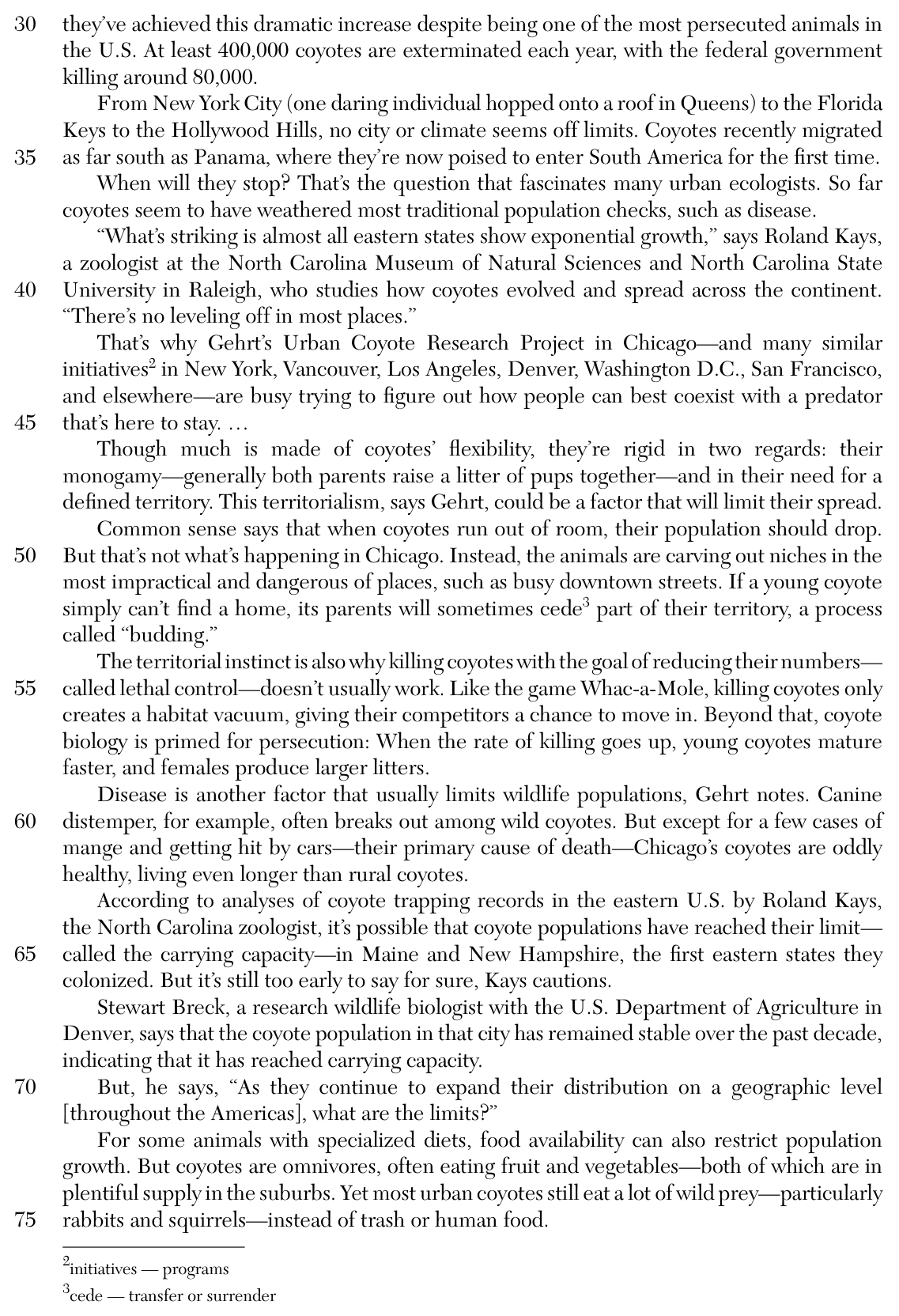
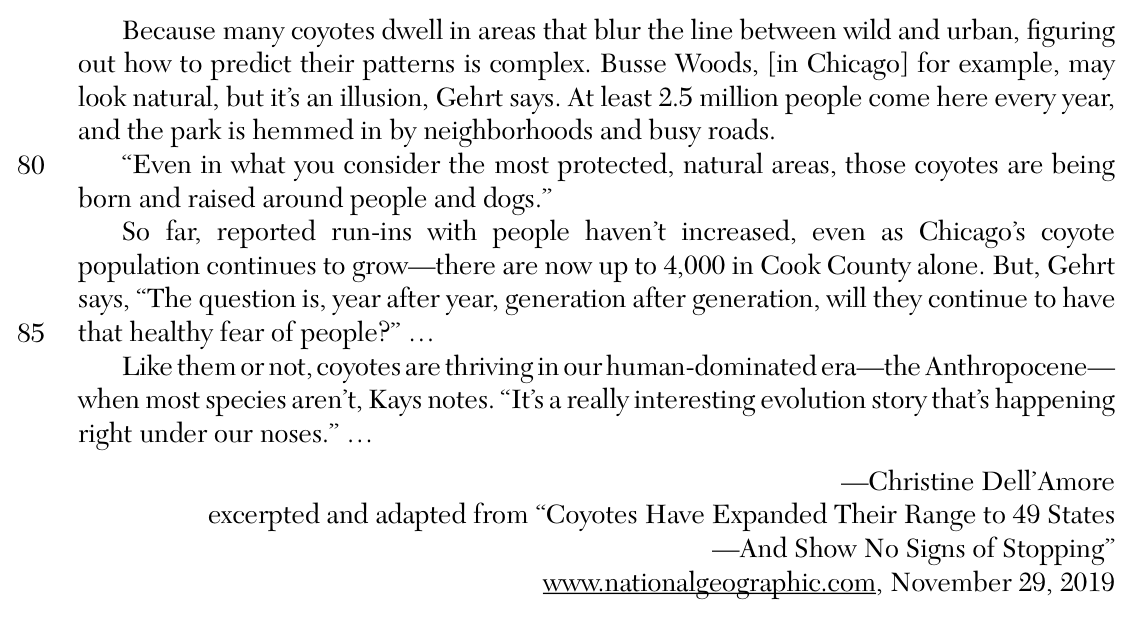
Worked solution for question 15
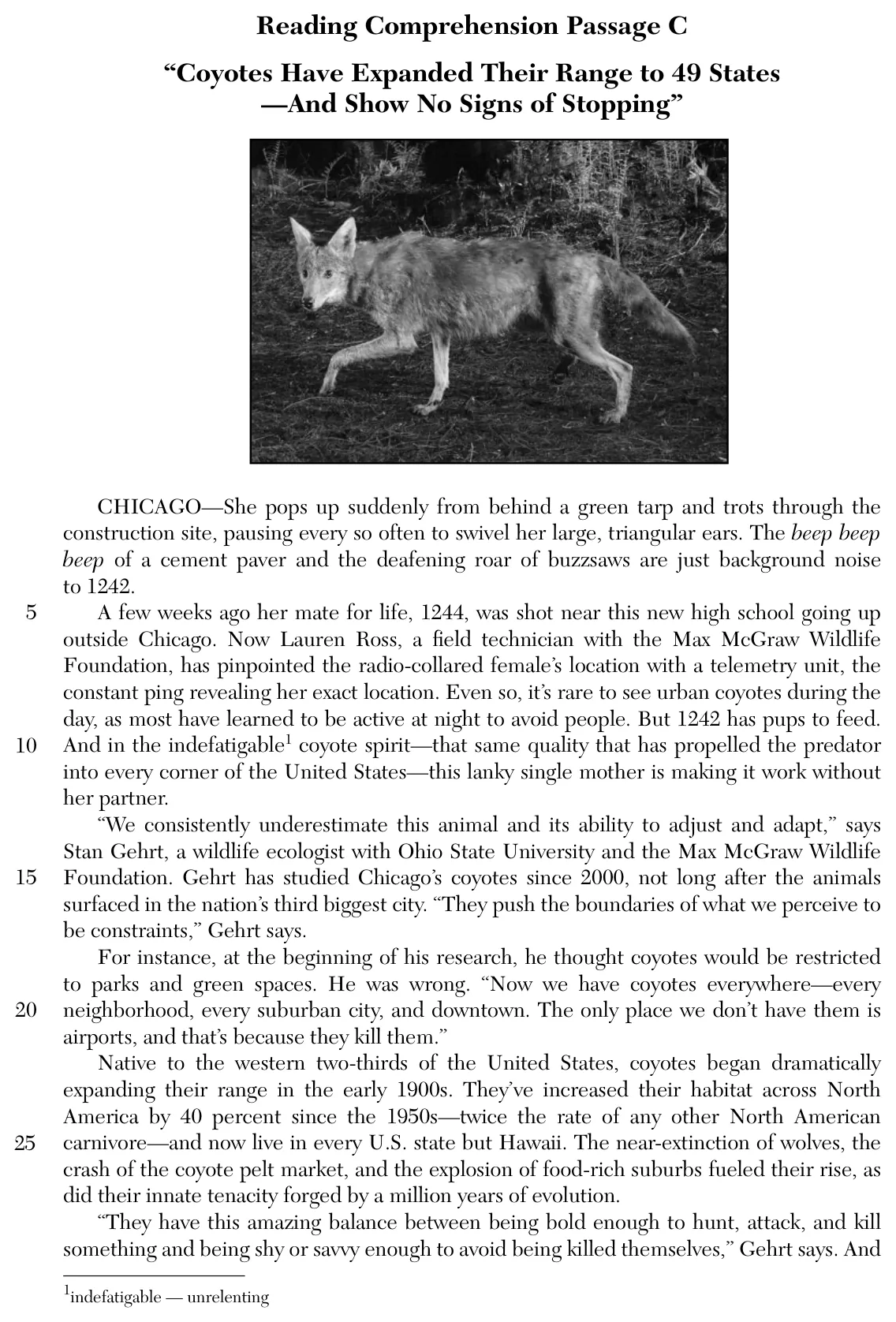
- An animal readers might associate with wilderness moves through noisy human construction.
- The surprising scene creates interest in how coyotes survive in a city.
- The construction site makes the coyote’s behavior surprising because it is busy and human-made. That surprise introduces the scientific question of how coyotes adapt to cities.
Answer choice 2To arouse curiosity
Q16 Numbered coyotes
What do the numbers and tracking details imply?
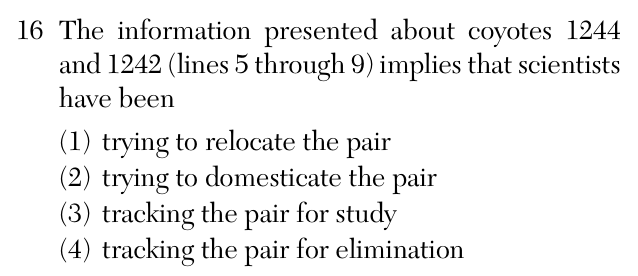
Worked solution for question 16
- The technician locates the female by a signal from her radio collar.
- That method and the individual identifiers indicate ongoing monitoring.
- Giving the animals identifiers lets researchers keep observations of individuals separate. The radio collar provides a way to locate an individual repeatedly as it moves.
Answer choice 3Scientists have been tracking the pair for research.
Q17 Tone toward the coyote
What attitude appears in lines 10–12?
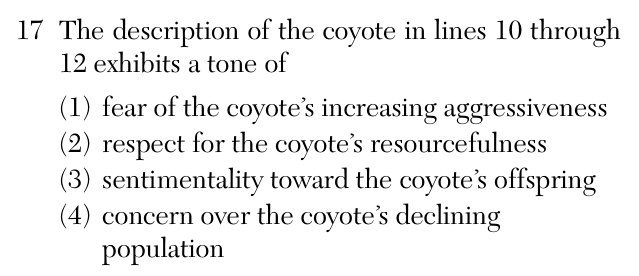
Worked solution for question 17
- The description emphasizes the mother’s persistence in feeding her pups after losing her mate.
- The author presents her adjustment as an accomplishment.
- Consider which details the writer chooses to foreground. The coyote navigating a built environment invites attention to the animal’s skill at finding a way through it.
Answer choice 2Respect for her resourcefulness
Q18 Revising habitat assumptions
What do the researcher’s findings in lines 13–21 accomplish?
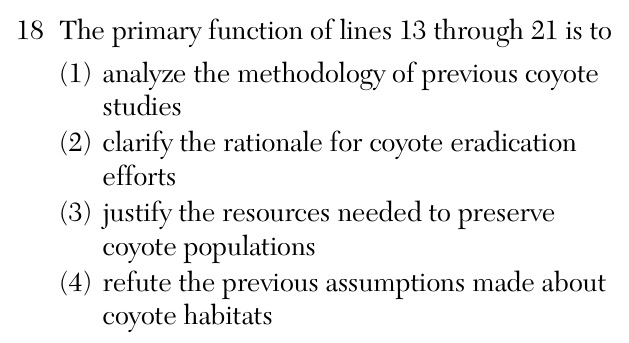
Worked solution for question 18
- The researcher initially expected coyotes to stay in green spaces.
- Sightings throughout the city show that the original restriction was too narrow.
Answer choice 4They refute earlier assumptions about habitat.
Q19 Range expansion
What largely enabled the historical expansion?
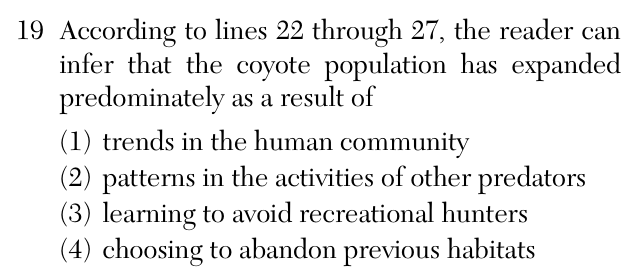
Worked solution for question 19
- Suburban growth provided food, while changes in hunting and the pelt market reduced pressures. The decline of wolves opened opportunities as well.
- These changes in the animals’ environment helped them spread beyond their previous range.
- The account connects range changes to changes people made in the landscape. Track that cause-and-effect claim instead of assuming all expansion came from a change in the animal itself.
Answer choice 1Changes linked to human communities
Q20 Innate tenacity
What quality is meant by the phrase in line 27?
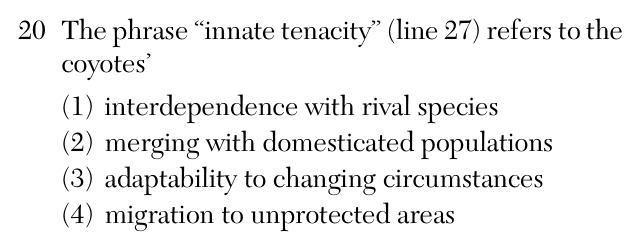
Worked solution for question 20
- The coyotes continue to succeed as competitors, habitats and threats change.
- Their tenacity is a persistent ability to adjust under pressure.
Answer choice 3Adaptability to changing circumstances
Q21 Population growth despite culling
What makes the figures in lines 28–32 striking?
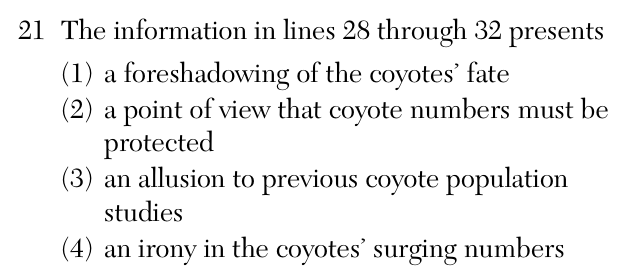
Worked solution for question 21
- The passage reports substantial annual killing alongside dramatic expansion.
- That outcome runs against the expectation that persecution would stop their spread.
- The irony depends on a reversal of the expected result. Extensive efforts to kill coyotes make the reported growth of their population more surprising.
Answer choice 4Their growth is ironic given the scale of persecution.
Q22 New habitats
What central idea do the examples from Queens to Panama support?
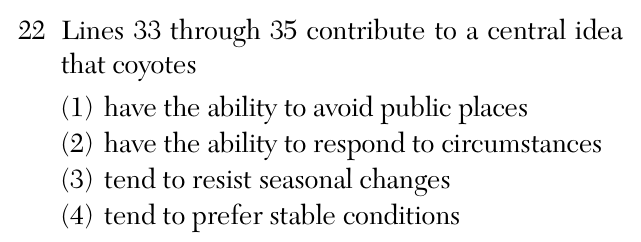
Worked solution for question 22
- The examples span a rooftop, urban and coastal areas, and a new southern range.
- Such varied settings show flexibility rather than dependence on a single habitat.
Answer choice 2Coyotes can respond to varied circumstances.
Q23 Budding
What happens when parents cede territory to young coyotes?
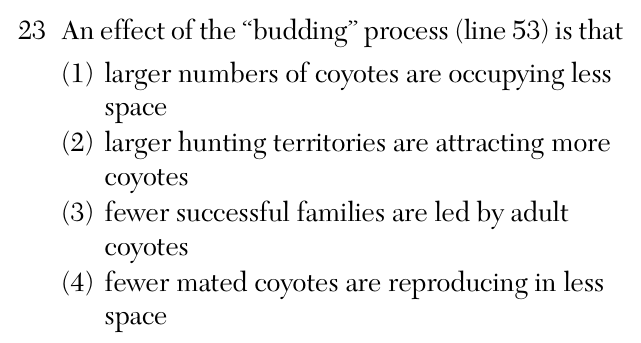
Worked solution for question 23
- Parents surrender part of an existing territory when a young coyote cannot find space.
- Dividing the same space allows more animals to establish territories.
- Budding creates additional family groups in space already used by coyotes. The implication is a higher density of family groups, which is different from merely having more available land.
Answer choice 1More coyotes can occupy less space per family.
Q24 Coexistence with humans
What do lines 76–85 suggest about human-coyote contact?
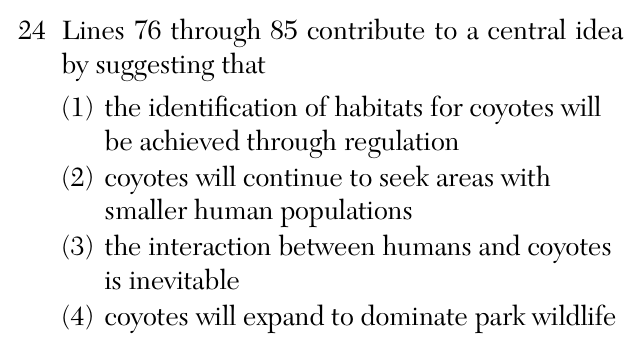
Worked solution for question 24
- Even a seemingly natural urban park is surrounded by roads and receives many visitors.
- Coyotes grow up near people and dogs there, so the boundaries between their habitats overlap.
Answer choice 3Some interaction is inevitable.
Part 2 Argument essay
Question indexArgument Argument on horse racing
Take a position on whether horse racing should be banned. Use at least three sources and respond to an opposing view.
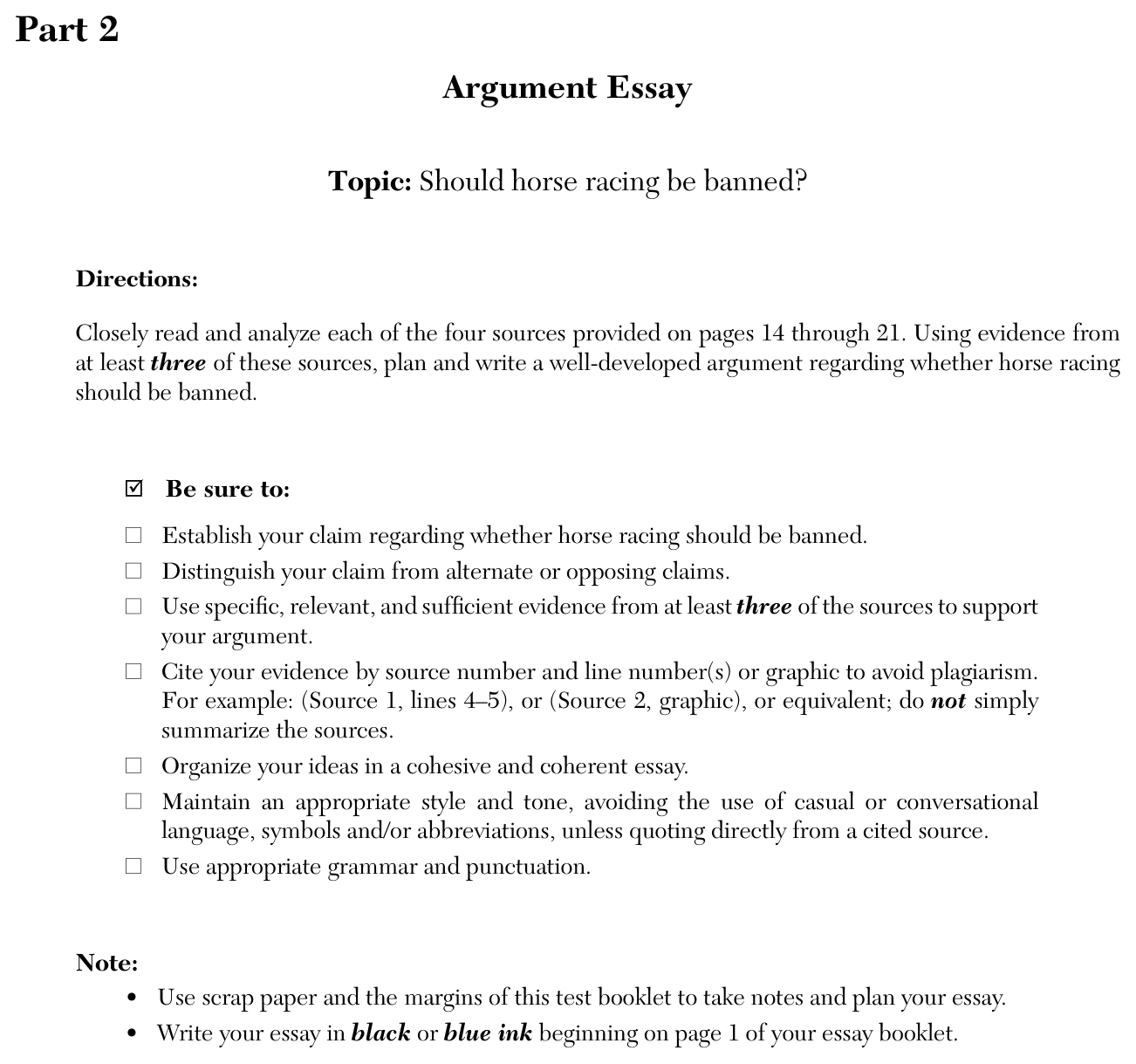

Writing plan and model response for argument
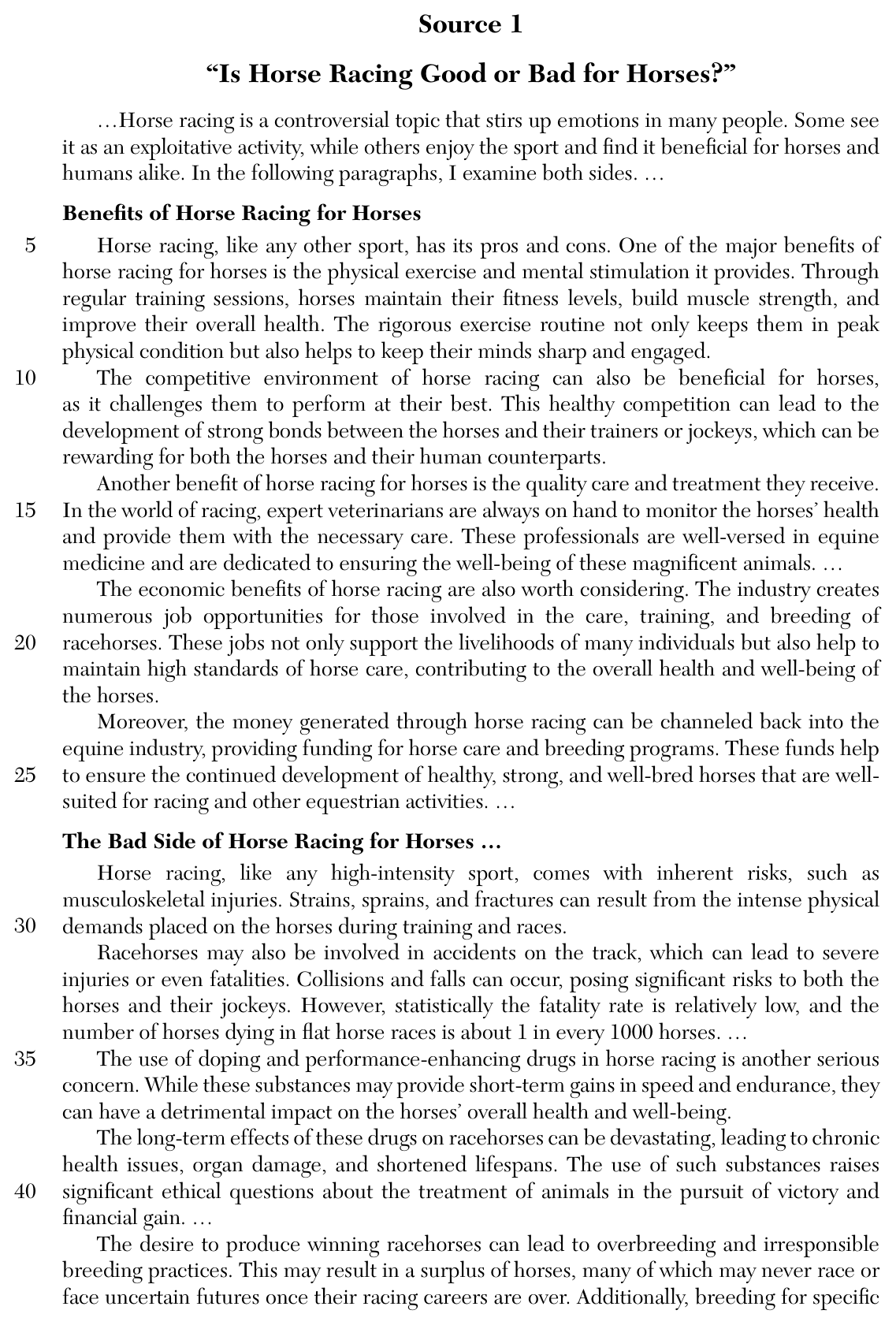
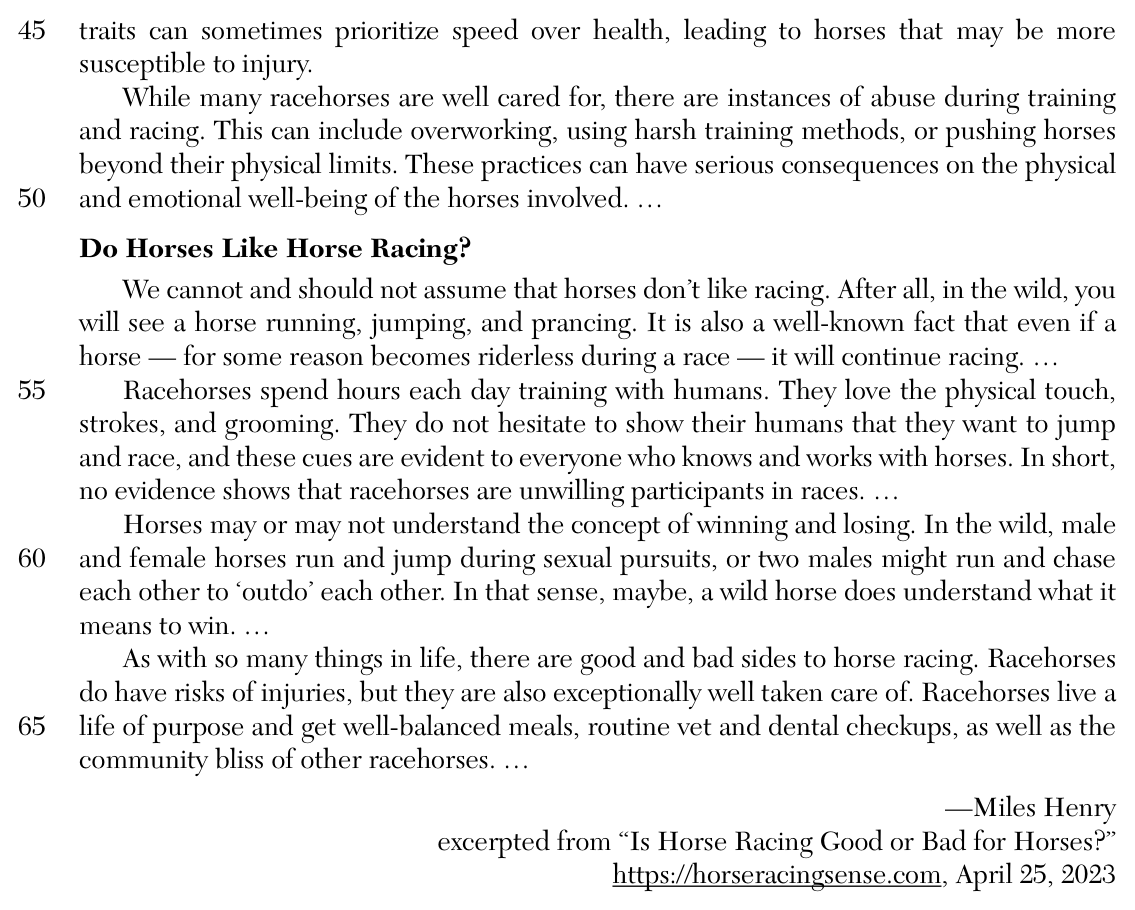
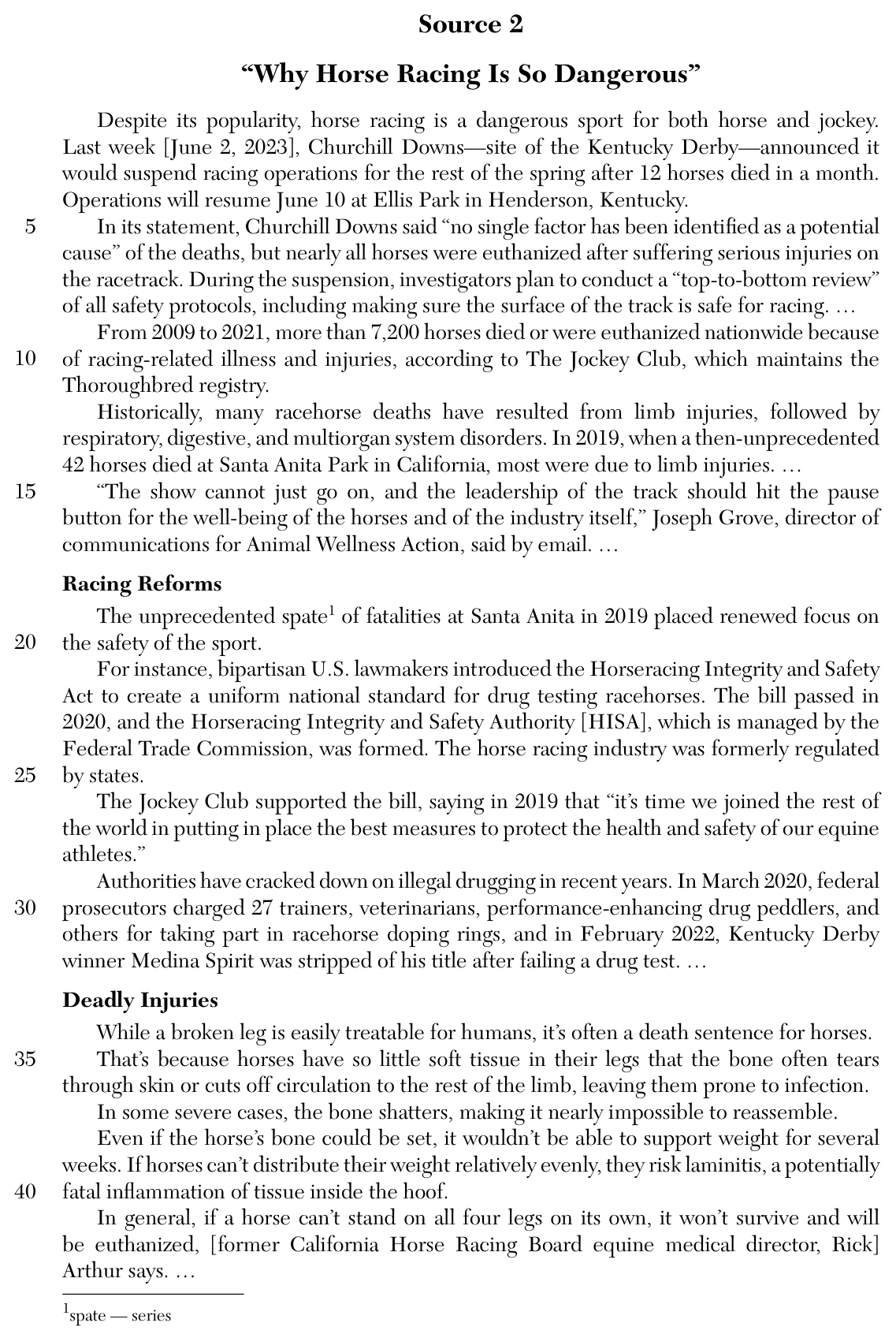
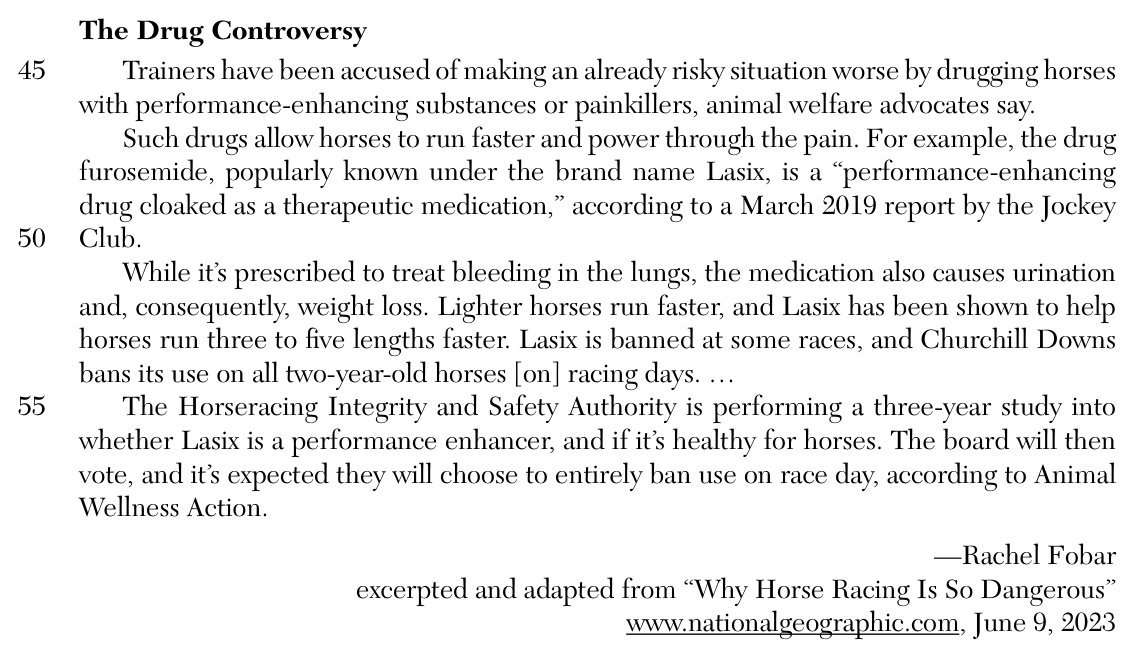
- Use Source 2 for animal injury and Source 3 for rider injuries. Weigh the economic case in Source 4 and the care described in Source 1.
- Explain how a phased transition addresses the strongest objection without treating jobs as proof of safety.
Central claimPhase out commercial racing because the risks to horses and riders are inseparable from the activity.
Model response
Horse racing draws spectators, employs skilled workers and supports businesses near racetracks. These benefits deserve to be weighed against the conditions that produce them. Commercial horse racing should be phased out because both horses and jockeys face serious risks intrinsic to racing at speed, even when facilities provide good care.
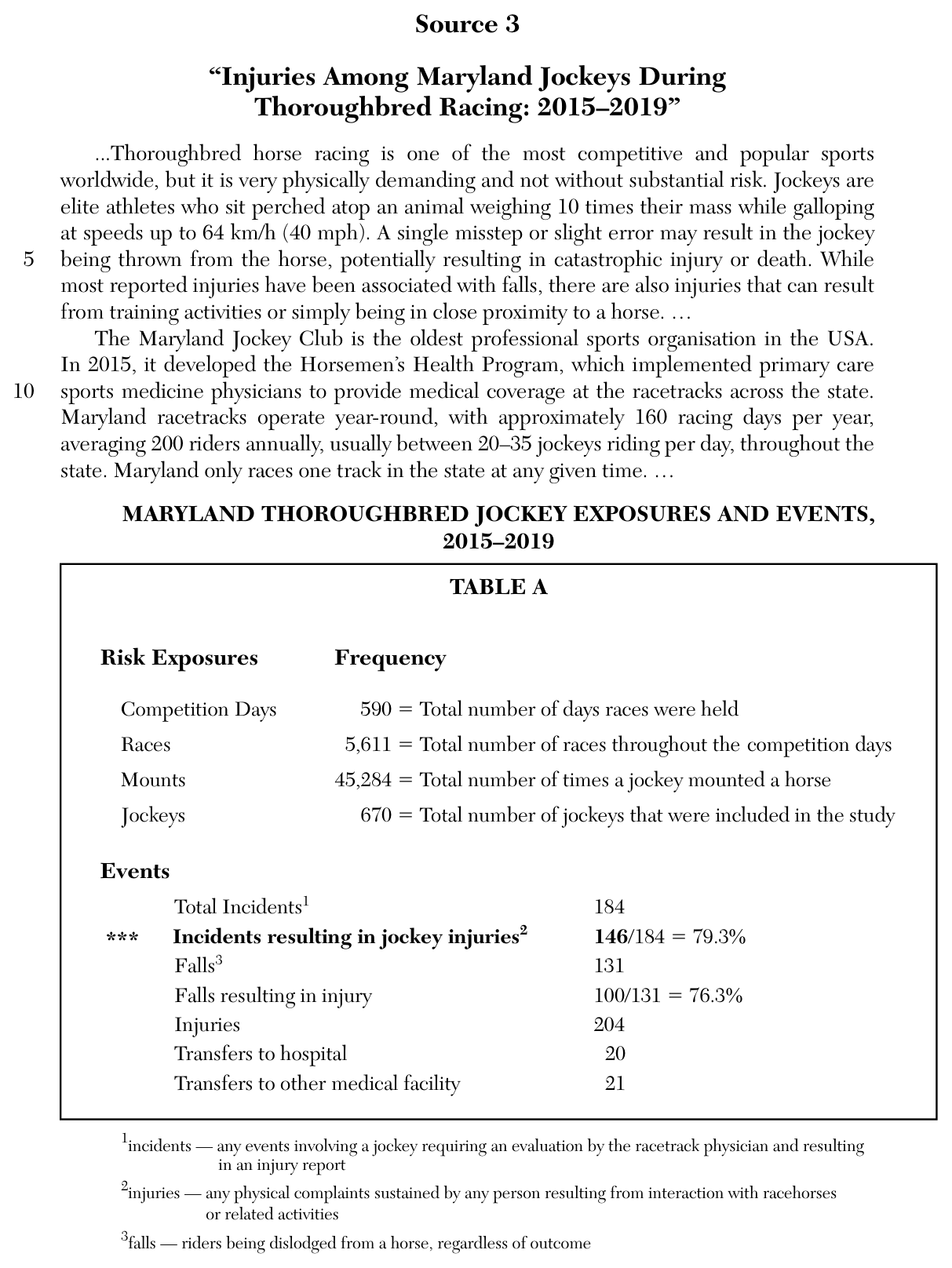
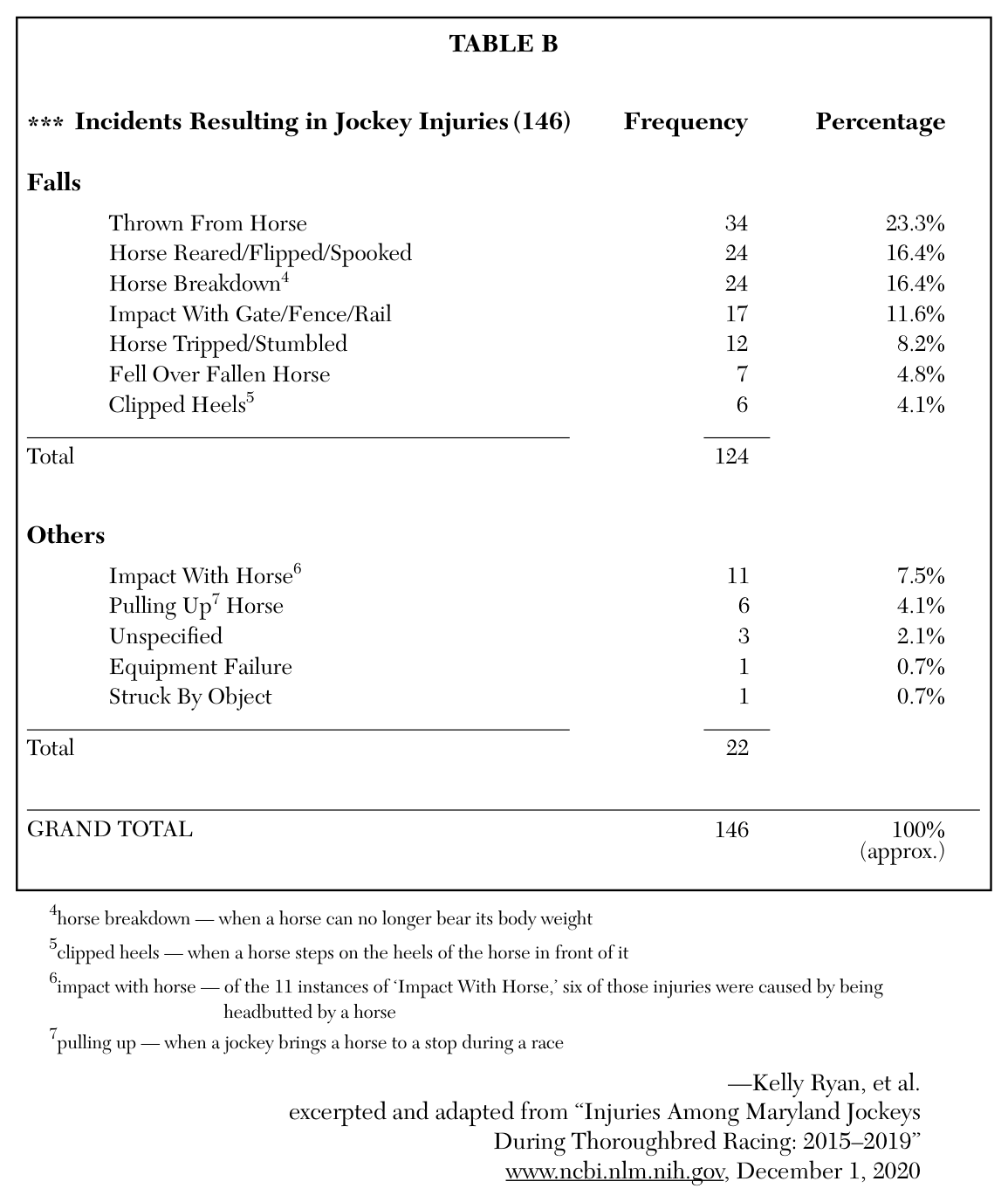
The most important risk is to the horse. Source 2, lines 9–14, reports deaths connected to racing and describes a cluster of fatal injuries at one track. Lines 32–40 explain why some leg injuries are difficult to survive, including complications that can follow when a horse can no longer distribute its weight normally. The evidence matters because a serious breakdown cannot always be corrected by rapid treatment. The riders face danger as well. Source 3’s graphic documents injuries after falls and identifies breakdowns and other collisions among the circumstances in which falls occur. The same high-speed event can therefore hurt both the animal and its rider.
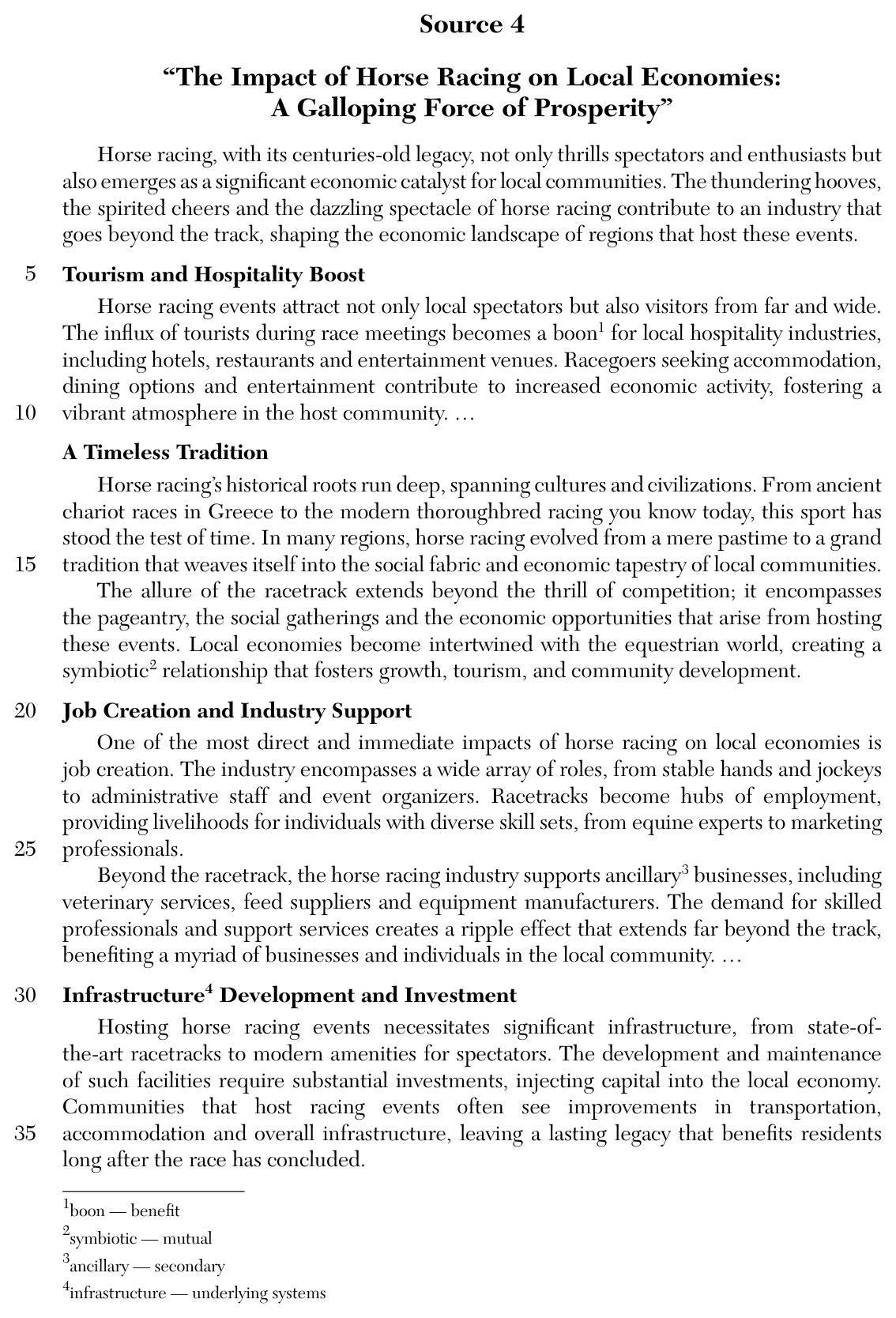
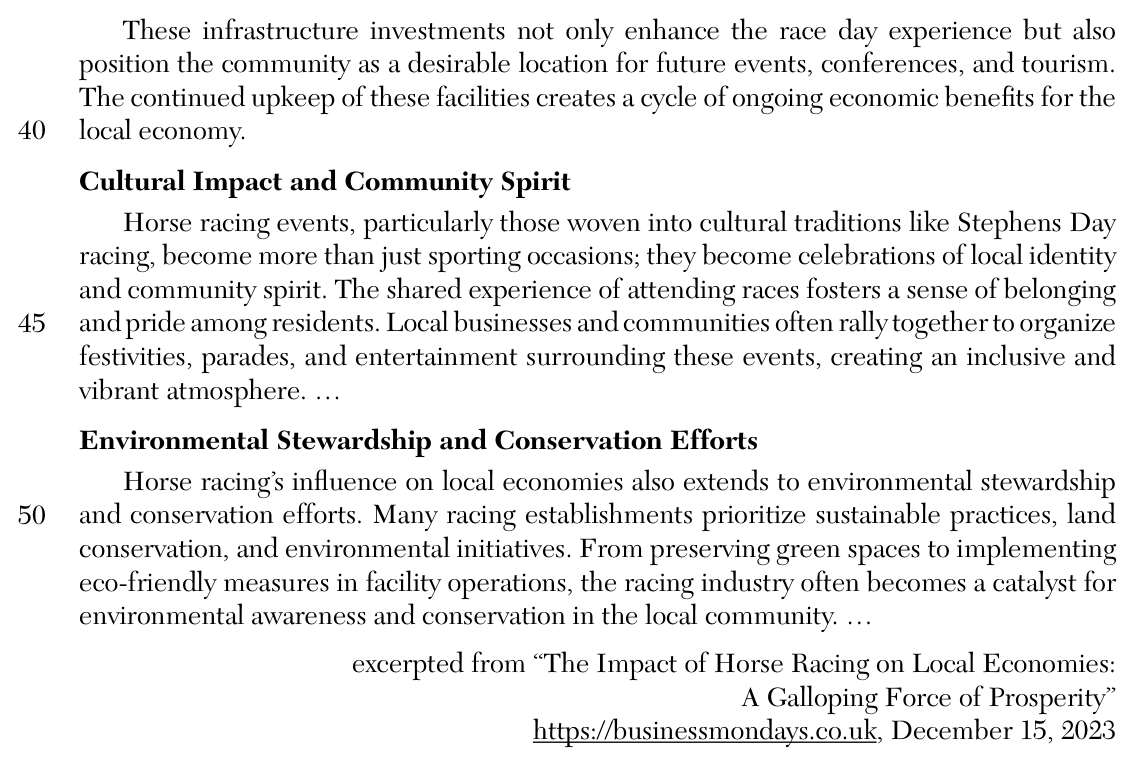
Defenders of racing have an important point about livelihoods. Source 4, lines 20–29, describes work that extends from the track to training, veterinary care and related businesses. Source 1, lines 14–21, emphasizes professional care. That evidence argues for an orderly transition. It does not establish that the racing conditions themselves can be made acceptably safe. Better oversight may reduce avoidable failures, but it cannot take speed and the possibility of a fall out of the contest.
A phased ban should allow time to fund retirement and placement for horses and retraining for affected workers. Communities could also redirect some facilities and expertise toward lower-risk equine activities. Such a transition recognizes the people who depend on racing while ending a practice that repeatedly places them and the horses in serious danger.
Part 3 Text-analysis response
Question indexAnalysis Silence and human desire
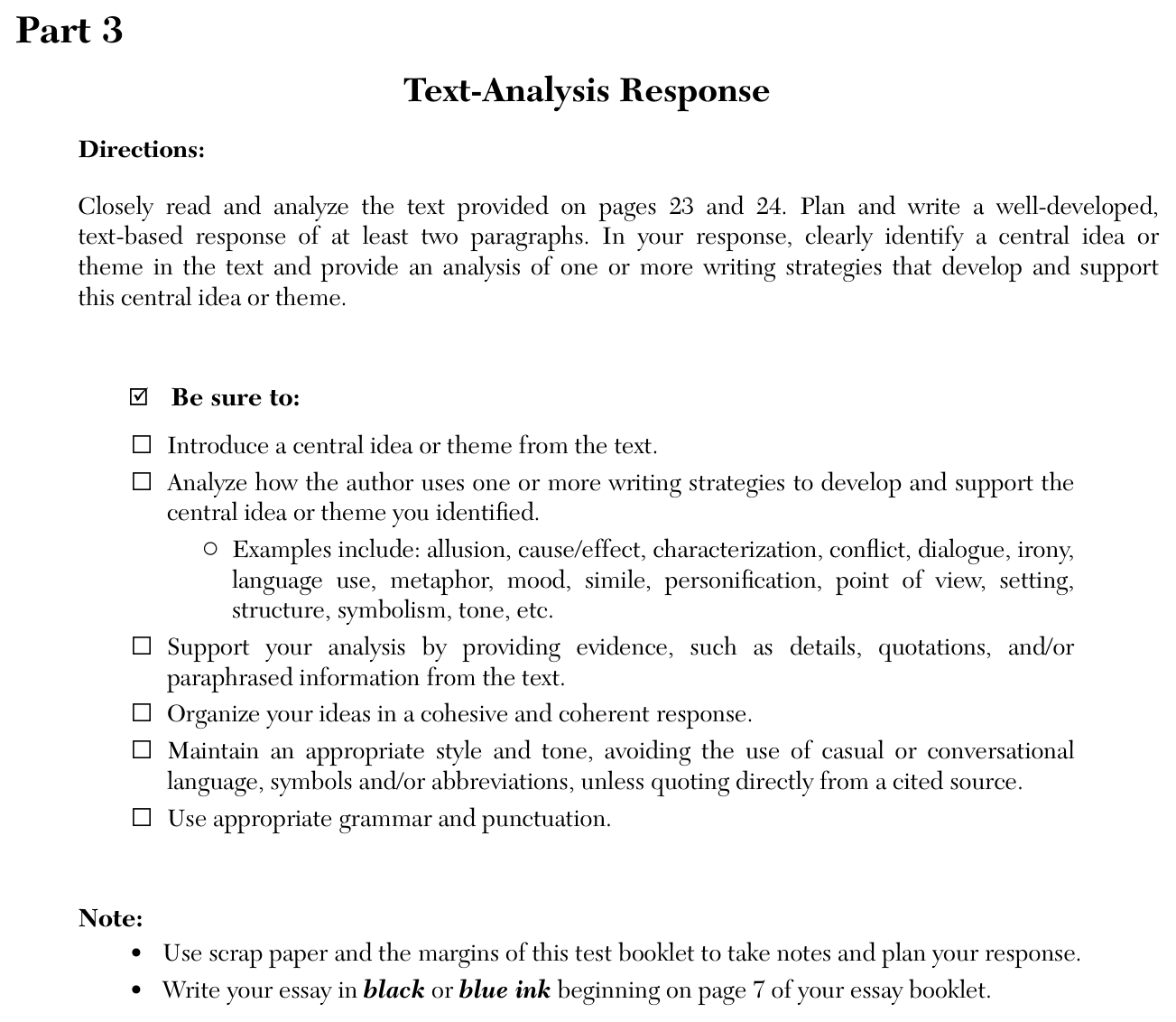
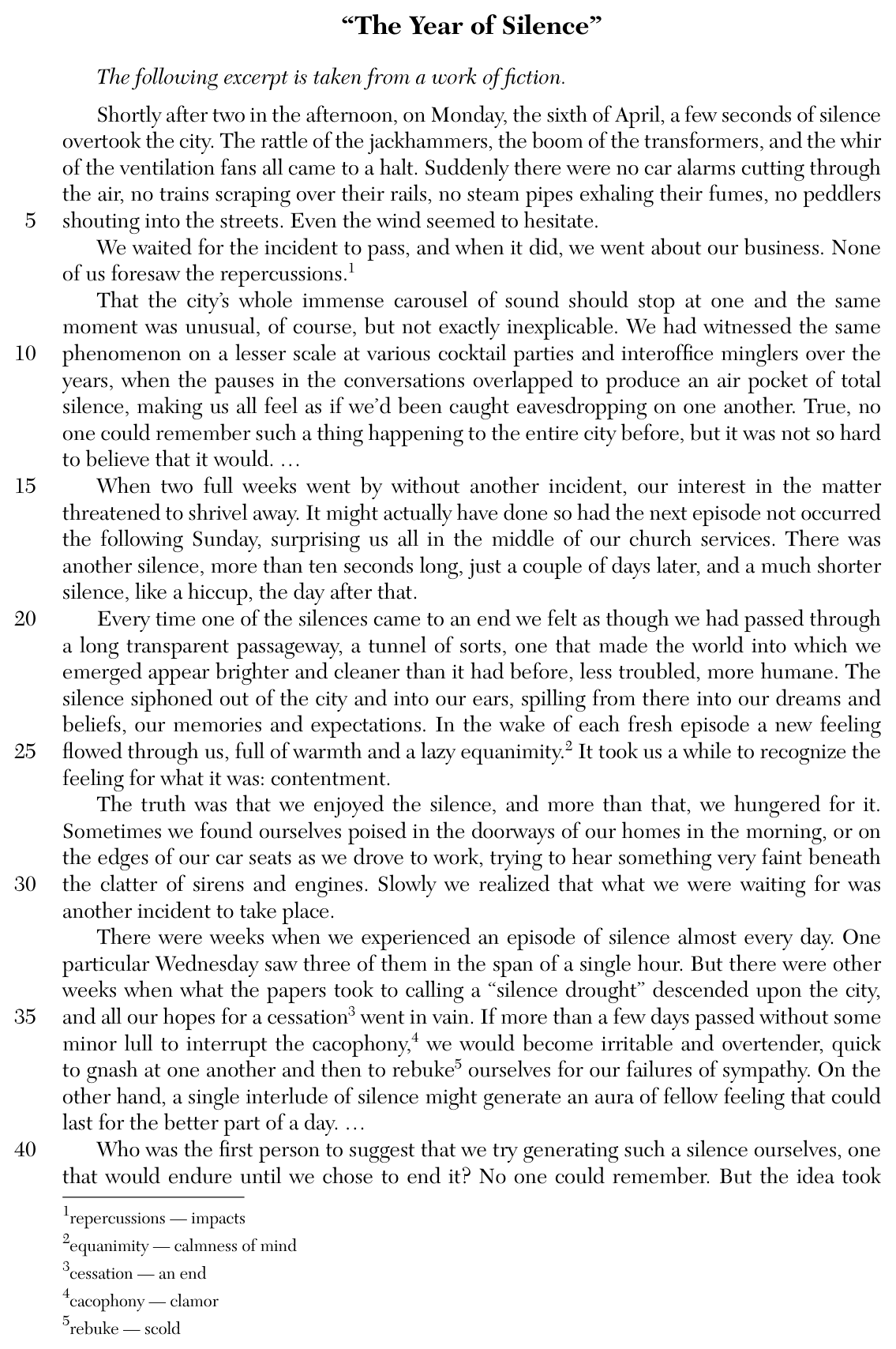
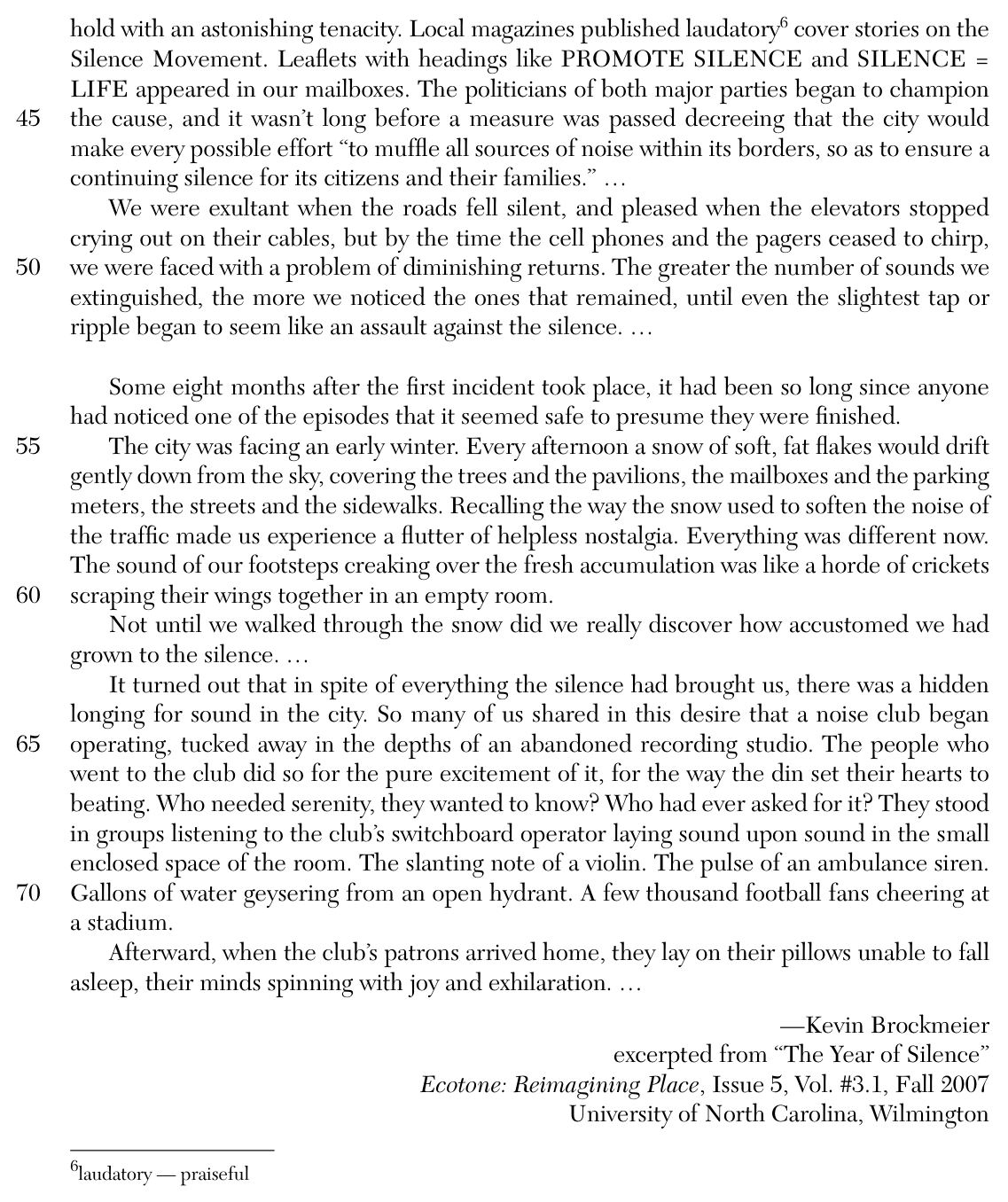
Analyze how a writing strategy in Brockmeier’s excerpt develops a central idea.
Writing plan and model response for analysis
- Trace the sequence from relief to organized control to the return of a desire for sound.
- Explain how the reversal complicates the opening view that silence is an uncomplicated benefit.
Central claimThe story’s reversal shows that an experience people value in moderation can become oppressive when imposed without limit.
Model response
In Kevin Brockmeier’s excerpt, the city’s pursuit of silence shows how an experience that brings relief in moderation can become oppressive when people try to make it permanent. The author develops this idea through a structural reversal. Early in the excerpt, accidental pauses make the city seem brighter and more humane, and the residents begin waiting eagerly for another pause (lines 20–31). The benefit depends on interruption. A short interval changes the way the residents experience the noisy life to which they return.
Once officials begin suppressing sound deliberately, the effect reverses. In lines 48–52, eliminating the loudest sounds makes the slightest remaining disturbance feel intolerable. Later, residents seek out sirens, music and crowds at an underground noise club (lines 63–73). The ending makes sound the source of excitement that silence had once been the source of relief. By reversing the roles of the two experiences, Brockmeier suggests that neither one can satisfy every human need when it dominates city life.
From the New York State Education Department. June 2026 English Language Arts Regents Examination. Internet. Available from https://www.nysedregents.org/hsela/626/reela-62026-exam.pdf. Accessed .